Take Up the Cross and Follow Him

Matthew 16:24-25 New King James Version (NKJV)

24 Then Jesus said to His disciples, “If anyone desires to come after Me, let him deny himself, and take up his cross, and follow Me.
25 For whoever desires to save his life will lose it, but whoever loses his life for My sake will find it.


Sunday, December 14, 2014

Christian Veterans of the Bitterroot, 15 Dec, 2014

Prayer Breakfast
0700 at BJ’s Restaurant
Hamilton, Montana

O Father, who by the birth of the holy child Jesus hast given us a great light to dawn upon our darkness: Grant, we pray thee, that in this light we may see light. Bestow upon us, we beseech thee, that most excellent Christmas gift of charity to all, that so the likeness of thy Son may be formed in us, and that we may have the ever brightening hope of everlasting life; in Jesus Christ’s name we pray. Amen.
- From The Book of Worship

1. Opening - Round the Table Individual Prayers
2. Breakfast is served
3. Morning Psalm: 77
4. Breakfast Reading: Matthew 1:18-25
5. Breakfast Discussion Topics:
          News around the valley
          Walk for Jesus Christ
                   7:00 am, 4 April, 2015
          Community Aid through Christian Churches; we must to teach our community to fish and to provide mutual aid to local governments.
                   Action Plan
                             1) What is in the kits?
                                      a) Hybrid of FEMA, Red Cross, State of Montana, and others
                             2) Schedule
                                      a) Pastor’s Introduction
                                      b) Pastor’s Opening Prayer
                                      c) Christian Veterans of the Bitterroot’s Mission Statement & Explanation Training
                                      d) Crowd breaks down into Round Robin Training into rooms
                                      e) Introduction Table Discussions
                                      f) Christian Veterans of the Bitterroot Closing Remarks
                                      g) Soup and Bread eat at their table of interest
                                      h) Pastor’s Closing Prayer
                             3) Pick first venues:
                                      a) Darby Foursquare Church
                                      b) Corvallis United Methodist Church
                                      c) Bitterroot Valley Church of the Nazarene
                             4) Pick topics and speakers
                                      a) Kits and Sets
                                      b) Communications
                                      c) Emergency Planning
                             5) Churches of Correspondence

5. 52 Weeks to Preparedness by Tess Pennington
                             1) Week 47 of 52: Emergency Medical Supply (List 4)
6. Closing - Round the Table Individual Prayers

Upcoming Events:
          22 Dec 2014 – 0700 – Push Back with Prayer Breakfast
          29 Dec 2014 – 0700 – Push Back with Prayer Breakfast
          4 Apr 2015 – 0645 – March for Jesus Christ
         
Follow the Fellowship of Christian Veterans:
On the Web: http://cvbitterroot.blogspot.com/
On Twitter: @Walk_April_4_15

Week 47 of 52: Emergency Medical Supply (List 4)

WHAT TO EXPECT WHEN YOU’RE EXPECTING…A COLLAPSE!

BY JOE ALTON, M.D. AKA DR. BONES AND AMY ALTON, A.R.N.P., AKA NURSE AMY

As a retired physician and nurse team whose entire focus is figuring out strategies for survival situations, We are often asked what medical issues are the most likely to be encountered in times of trouble.  The answer depends somewhat on what event you expect to throw society into disarray. Knowing what situations to prepare for and making provision for it will make you a more effective medical resource and might save lives.

Are you expecting:

Economic Collapse?  If some event causes us to collapse financially, it stands to reason that food from farm areas will cease to be delivered to supermarkets (who’s paying the truckers?).  As such, you’ll be dealing with malnutrition among your people.  Besides food storage, you should be stockpiling multivitamins (either commercial or natural) to prevent deficiencies that cause disease, such as Scurvy (lack of vitamin C), Beri-Beri (lack of vitamin B1) or Rickets (lack of Vitamin D in children).

Civil Unrest?  Many collapse events will be fraught with episodes of civil unrest, so you should be well acquainted with how to deal with traumatic injuries such as fractures and hemorrhagic wounds.  Supplies here will be lots and lots of gauze bandages (keep old sheets, they can be used to improvise),  antiseptic solutions such as betadine, and some method of closing wounds (butterfly closures, Steri-strips, surgical or super glue, staples, and/or sutures) when appropriate.

You can expect that many wounds will be contaminated with dirt and debris, and therefore bacteria or other microorganisms.  It is essential to know when to close a wound and when to leave it open; this is much more important to understand than how to throw a stitch or place a staple.  The young Georgia woman in the news who had a laceration from a zipline injury had her wound closed with 22 staples.  Doctors unwittingly sequestered bacteria deep in the injury that caused a serious infection called “necrotizing fasciitis”, costing her a leg and threatening her life.

Pandemics?  If your area is invaded by a superflu, you will need plenty of extra masks (both N95 and standard) and gloves (nitrile is less allergenic than latex).  You will have to know how to plan out a sick room protocol that will isolate the ill members of your group and you might consider antivirals like Tamiflu.  Tamiflu is helpful in decreasing sick time if taken early, and may actually has a preventive effect.  Be sure to ask your doctor for a prescription for each member of your family each flu season.

Radiation events?  Meltdowns, dirty bombs, nuclear apocalypse, EMPs, Coronal Mass Ejections, whew! If this is something you’re concerned about, learn how to make a shelter in your home that will block radiation effects.  Learn about “halving-thicknesses”, the thickness of  a material that will decrease your exposure by half.  These multiply as you add additional thicknesses of a substance (1/2  x ½ x ½ x ½ = 1/16 total exposure, for example).  Here are the halving-thicknesses of various materials:

Lead:                  0.4 inches or 1 centimeter
Steel:                  1.0 inch or 2.5 centimeters
Concrete:            2.4 inches or 6 centimeters
Soil (packed):      3.6 inches or 9 centimeters
Water:                7.2 inches or 18 centimeters
Wood:                11.0 inches or 30 centimeters
Also, consider the accumulation of Potassium Iodide (KIO4) tablets.  These will help prevent certain thyroid cancers which can be a long-term complication of radiation exposure.

You may ask, “How can I know what medical issues I’ll have to deal with if the you-know-what hasn’t hit the fan yet?”.  Well, many physicians have found themselves in this circumstance and learned the hard way.  Responders to the Haitian Earthquake, Peace Corps caregivers and Doctors Without Borders are just some of the medical personnel that have compiled this information for us.  In no particular order, here is a top ten list from one physician that spent 15 months as the sole medical resource in a remote and austere location:

Minor Musculoskeletal injuries (sprains and strains)
Minor trauma (cuts, scrapes)
Minor infections (cellulitis, “pinkeye”, urinary infections)
Allergic reactions (some severe)
Respiratory infections (pneumonia, bronchitis, influenza, common colds)
Diarrheal disease (minor and major)
Dental issues (toothache, loose crowns and lost fillings)
Major traumatic injury (fractures, occasional knife and/or gunshot wounds)
Burn injuries (all degrees)
Pregnancy (!) and Birth Control
You may have thought of the top nine, but have you given some thought to number 10, pregnancy and birth control?  Pregnancy is a natural process and usually ends with a healthy mother and baby, but not so long ago the announcement that someone was pregnant was met with concern as well as joy.  Complications such as miscarriage, bleeding, and infection are easily dealt with in most cases today, but were a common cause of maternal deaths in the past. If modern medical care is unavailable, you may find yourself thrown back to that era. Consider birth control strategies such as the Rhythm Method and learn the basics of how to deliver a baby.

You’ll benefit from storing as many medical supplies as you can.  How much is too much?  You can NEVER have too many medical items in your preps; any “extras” you are willing to let go of will be extraordinarily valuable barter items in a collapse situation.

Accumulate stockpiles of antibiotics as well; these will deal with many of the listed issues above if they are used judiciously.  My research shows that some aquarium antibiotics may be identical in dosage, action, appearance and even numbering as those stocked in human pharmacies, and may be purchased in quantity without a medical license from a number of online sources.

All of the above topics are discussed in detail for free on our website at www.doomandbloom.net and more so in our recent #1 Amazon Bestseller (Survival Skills Category) “The Doom and Bloom™ Survival Medicine Handbook”.  It’s not your everyday first aid book, as its main assumption is that there are no longer hospitals, clinics or doctors, and that YOU are the end of the line when it comes to the medical well-being of your loved ones in times of trouble.  You can find it at www.doomandbloom.net, www.createspace.com/3697264, and Amazon.

Please, as you learn how to treat medical problems in hard times, you are learning a skill, not a trade.  The practice of medicine or dentistry without a license is illegal and punishable by law.  If modern medical care IS available, seek it out.

Dr. Bones and Nurse Amy

Copyright Doom and Bloom, LLC 2012

Special thanks to Dr. Bones and Nurse Amy for contributing their time and effort on this portion of the 52-Weeks to Preparedness.

Preps to Buy:

An assortment of the following:

Multi-vitamins
Gauze bandages
Antiseptic solutions such as betadine
Butterfly closures, Steri-strips, surgical or super glue, staples, and/or sutures
Extra masks (both N95 and standard)
Gloves for treating medical wounds
Antiviral medicines such as Tamiflu
Potassium iodide (KIO4) tablets
Benadryl or allergy medicines
Contraception
Anti-nausea medicine
Electrolyte drinks or homemade electrolyte powders
Braces for sprains
Moleskins for foot relief
Stethoscope
Gloves
Duct tape
Potassium iodide capsules
Snake bite kit
Anti-diarrhea medication (for adults and children)
Antibiotics
Stool softeners
Petroleum jelly or other lubricant
CPR mask
Colloidal silver
Action Items:

Make a list of the medical emergencies you could foresee occurring during an emergency and research (in depth) the preventative measures, treatment and care.
Take an advanced first aid or medical course. Many of the preparedness/survival expos going on offer these sorts of classes. Also doing a simple Google search of “survival courses” will provide you with a long list of region specific courses being offered.
Do inventory and keep an organized list of medical items you have on hand.
Continue to invest in medical emergency manuals and books in order to familiarize yourself with up-to-date medical information.
Be proactive and create first response packs for wounds in order to expedite the emergency care process.

If childbirth during a sudden emergency is a possibility, research and learn the correct procedure in how to assist in the birth as well as ways to keep the baby and mom healthy.

Thursday, December 11, 2014

Pastor: As Father of Four Adopted Children, Being Forced to Cover Abortions Is ‘Repulsive Beyond Words’

Kelsey Harkness

For 36 years, Jim Garlow didn’t know his first adopted child was the result of a rape.
But after his wife Carol lost a six-year battle with cancer last year, their daughter, Janie, went in search of her birth mother. In succeeding, Janie also discovered the horrific circumstances of her own conception.
The story spurs Jim Garlow, a pastor in California, to fight a state mandate that his church’s employee health plan pay for elective abortions.
When Janie’s birth mother was a freshman in high school, two senior boys asked her to go to the movies. Instead, they took her to an open field, where they raped her. She became pregnant.
Heroically, the teenage girl decided not to get an abortion but to keep the baby until birth, then give her up for adoption.
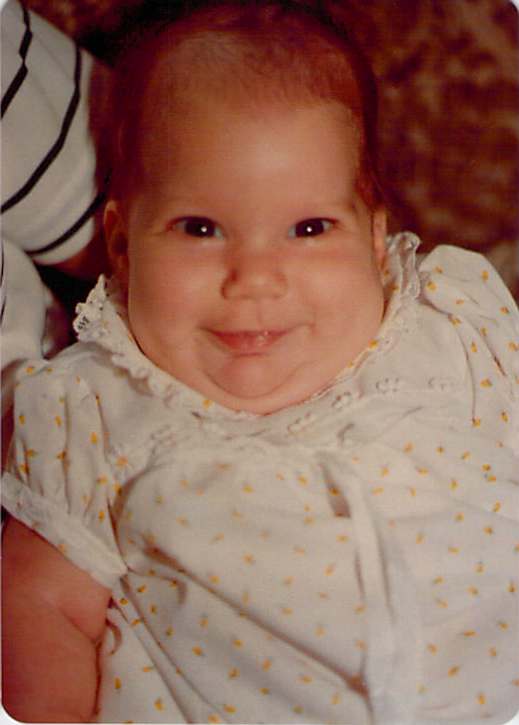
Baby picture of Janie Garlow.
Janie as a baby. (Photo courtesy Janie Garlow McGarity)
In an emotional interview with The Daily Signal, Garlow says the decision that spared his future daughter wasn’t the result of her birth mother’s “profound religious convictions” but because “she felt like it was the right thing to do.”
Janie, now 37, became the first of four children whom Jim and Carol Garlow would adopt. Those children — Josie Garlow Debus, Jake Garlow, Josh Garlow and Janie Garlow McGarity — are all grown today.
From left to right: Josie Garlow Debus (recently married), Jake Garlow, Jim Garlow, Josh Garlow, and Janie Garlow McGarity.
Jim Garlow (center) and children (from left) Josie Garlow Debus, Jake Garlow, Josh Garlow and Janie Garlow McGarity. (Photo courtesy Jim Garlow)
Garlow, 67, is senior pastor of Skyline Church in San Diego, founded in 1954 as part of the Wesleyan denomination. After the death of his first wife, he married Rosemary Schindler, an active advocate for Christians all over the world.
Their father regards the four Garlow children as the fruit of four women who made the “courageous” decision to go through with their pregnancies. The most courageous of all, he says, was Janie’s mother.
Garlow, who in 1995 became the third senior pastor in Skyline’s 60-year history, holds a doctorate in historical theology from Drew University. He received a master’s degree in theology from Princeton Theological Seminary and a master of divinity from Asbury Theological Seminary.
His religious beliefs, combined with a deep gratitude for the four mothers who chose to keep their unborn children, have anchored his pro-life views.
Pastor Jim Garlow speaking at the West Coast Walk for Life in San Franscisco.
Pastor Jim Garlow speaks during West Coast Walk for Life in San Francisco. (Photo courtesy Jim Garlow)
And then this fall, the unimaginable happened: Garlow discovered the state of California was forcing him and the staff of his church to pay for  health insurance plans that cover elective abortions.  They have no choice.
The state’s rule, the pastor says, defies every fiber of his being:
I feel that not only [that] the killing of babies in the womb is wrong foundationally, but as a father who had the privilege of adopting four children … was repulsive beyond words.
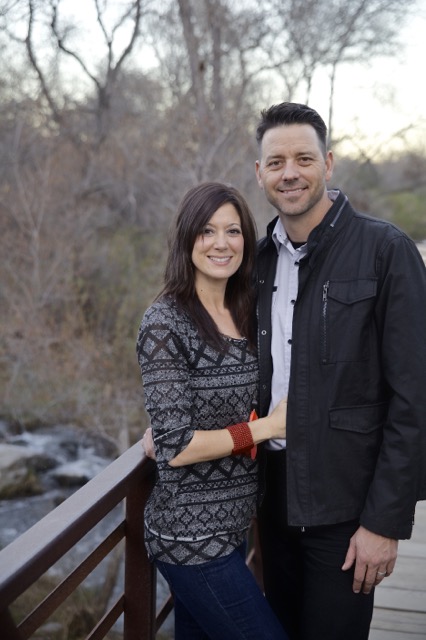
Janie with her husband Jeremy McGarity. (Photo courtesy Janie Garlow McGarity)
Janie with her husband, Jeremy McGarity. (Photo courtesy Janie Garlow McGarity)
Garlow didn’t know how to break the news to his tight-knit congregation. After he was asked to speak at a congressional briefing Dec. 1,  though, he sent an e-blast to parishioners, writing:
I apologize for bringing bad news. This is shocking … and repulsive. As of last Aug. 22, our California state government (not Obamacare, this is the state) has required all insurance policies to cover elective abortions. This includes us as a church. We – along with other churches and Christian colleges – are protesting this coercive and intrusive action by filing formal protests against this abusive action. I will be speaking on this topic this week in Washington, D.C., at a special hearing at which we are strongly urging the federal government to step in immediately and pass the ‘Abortion Non-Discrimination Act.’ Pray for me as I speak. And pray for Congress to act – now.
Call it ironic: Churches in California are forced to pay for abortions through employee health insurance, but under Obamacare are supposed to be exempt from paying for contraceptives and abortion-inducing drugs for their employees.
Since 2005, under a measure known as the Weldon Amendment, Congress has prohibited states that receive certain federal funds from discriminating against insurance plans that don’t provide abortion coverage. The Hyde Amendment, first passed in 1976, prohibits using federal tax money to pay for elective abortions.
So how did this happen in California?
The state’s abortion mandate didn’t go through the normal legislative process, says Casey Mattox, a senior counsel at Alliance Defending Freedom, which champions religious liberty.
Mattox, who represents Garlow’s Skyline Church and seven other churches in California, recalls how the issue of contraceptives was debated as part of Obamacare:
Legislatures realized, ‘We can’t force churches to pay for contraceptives,’ that clearly you have to exempt churches from that mandate. [State lawmakers] were able to put in appropriate exemptions to make sure at least some aspect of religious liberty was protected, but this [California] abortion mandate just went through a bureaucratic process. It’s basically a sneak attack on religious liberty. It came out of nowhere.
The California Department of Managed Health Care mandated that, effective Aug. 22, almost all health insurance plans must cover elective abortions.
The rule came after the American Civil Liberties Union convinced state insurance officials that abortion is a “basic health service.” Siding with the ACLU, state bureaucrats decided the agency no longer would approve health plans that don’t cover the life-ending procedure.
“There was no opportunity for churches to weigh in on the process,” Mattox says.
In September, the lawyer filed an administrative complaint on behalf of Garlow and other California pastors with the Office of Civil Rights in the U.S. Department of Health and Human Services. The pastors have yet to receive a response.
Sarah Torre, a policy analyst who follows religious liberty cases for The Heritage Foundation, says that in the current legal landscape, the decision before pastors such as Garlow is this: Continue offering health insurance covering procedures that end the life of unborn children, or drop insurance altogether.
“So Pastor Garlow and others can do nothing but wait on bureaucrats in HHS to enforce the law,” Torre says.
Walk-for-Life-2010-Jim-speaking-to-crowd-2
The crowd listens to Jim Garlow at the 2010 West Coast Walk for Life in San Francisco. (Photo courtesy Jim Garlow)
Churches and other religious organizations can avoid the mandate by self-insuring, but it’s a costly endeavor that could take months, even years.
“We can’t self-insure, Garlow says. “We’d need years of preparation to be in that kind of posture economically.”
Garlow and others appealed to Congress, hoping his story would spur legislation to protect the conscience rights of individuals and churches.
A total of 132 lawmakers, led by Reps. Diane Black, R-Tenn. and Rep. John Fleming, R-La., wrote Nov. 25 to Health and Human Services Secretary Sylvia Mathews Burwell to express “deep concern” over the California abortion mandate.
“Forcing pastors, teachers, social service providers and Catholic institutions to pay for abortion should be unthinkable,” they wrote.
HHS has yet to respond to the lawmakers’ request to enforce the Weldon Amendment in California.
It is clear that Burwell “does not intend to enforce the law,” Fleming told The Daily Signal.
Conservative lawmakers are pushing for passage of the Abortion Non-Discrimination Act, part of H.R. 940, which would allow individuals to pursue legal action to protect their religious rights.
Pro-life members of the House and Senate will not back down, Fleming says, but their success depends upon the support from Republican leadership, which previously blamed inaction on Senate Majority Leader Harry Reid.
(Photo By Bill Clark/CQ Roll Call)
‘It’s time': Rep. John Fleming, R-La. (Photo:Bill Clark/CQ Roll Call)
In January, though, the Nevada Democrat will be succeeded by current Minority Leader Mitch McConnell, R-Ky., when Republicans claim their new nine-seat majority in the Senate as a result of the midterm elections.
“That excuse is getting very weak now that we have won a majority in the Senate and we have a resounding majority in the House,” Fleming says. “It’s time that our GOP leadership begins to get on board.”
Until then, California churches are expected to pay for a life-ending procedure that contradicts the core of their beliefs.
“I can’t fathom us participating in something so horrific and sinful,” Garlow says.
Sadly, the pastor and his supporters believe, he already is.
141207_PastorStory_Harkness2
Jim and Rosemary Schindler Garlow. They married after the death of his first wife. (Photo courtesy Jim Garlow)

Sunday, December 7, 2014

Christian Veterans of the Bitterroot, 8 Dec, 2014

Prayer Breakfast
0700 at BJ’s Restaurant
Hamilton, Montana

O Father, whose chosen dwelling is the heart of the lowly: We gave thee thanks that thou didst reveal thyself in the holy child Jesus, thereby sanctifying all childhood in him. We beseech thee to make us humble in faith and love, that we may know the joy of the Gospel that is hidden from the wise and prudent and revealed unto babes. In Jesus Christ’s name we pray. Amen.
- From The Book of Worship

1. Opening - Round the Table Individual Prayers
2. Breakfast is served
3. Morning Psalm: 85
4. Breakfast Reading: Luke 21:25-36
5. Breakfast Discussion Topics:
          News around the valley
          Community Aid through Christian Churches; we must to teach our community to fish and to provide mutual aid to local governments.
                   Action Plan
                             1) What is in the kits?
                                      a) Hybrid of FEMA, Red Cross, and State of Montana
                             2) Schedule
                                      a) Opening Remarks
                                      b) Opening Prayer
                                      c) Explanation
                                      d) Round Robin or Assembly Line
                                      e) Table Discussions
                                      f) Closing Remarks
                                      g) Soup and Bread
                                      h) Closing Prayer
                             3) Pick first venues:
                                      a) Darby Foursquare Church
                                      b) Corvallis United Methodist Church
                                      c) Bitterroot Valley Church of the Nazarene
                             4) Pick topics and speakers
                                      a) Kits and Sets
                                      b) Communications
                                      c) Emergency Planning
                             5) Always finish with “Breaking Bread”
5. 52 Weeks to Preparedness by Tess Pennington
                             1) Week 46 of 52: Survival Caches
6. Closing - Round the Table Individual Prayers


Upcoming Events:
          8 Dec 2014 – 0700 – Push Back with Prayer Breakfast
          15 Dec 2014 – 0700 – Push Back with Prayer Breakfast
          22 Dec 2014 – 0700 – Push Back with Prayer Breakfast
          29 Dec 2014 – 0700 – Push Back with Prayer Breakfast
          4 Apr 2015 – 0645 – March for Jesus Christ
         
Follow the Fellowship of Christian Veterans:
On the Web: http://cvbitterroot.blogspot.com/
On Twitter: @Walk_April_4_15

Week 46 of 52: Survival Caches

Archaic food caches have been found all over the world.  The fact that our ancestors planned for the unexpected gives us a clear picture into their unpredictable lifestyle.  Foods such as nuts and dry goods as well as foraging tools were put away for a time when they needed them the most (Source). Today, we face the same uncertainties in life; and preparing for this sudden upheaval is the best way we can secure our odds at survival.

Survival caches are the ultimate back up plan. If you are going for your survival cache, that means, Plan A and Plan B went awry. In this case, you may be left to survive with only the contents in your cache. Therefore, you must plan out the contents accordingly.

Given the seriousness of this preparedness issue, many preppers see the value in having multiple caches spread out geographically to fall back on in order to lessen the risk of losing everything. Survival caches can be buried or hidden in secure areas around the property to ensure you have extra survival items to fall back on. Keep in mind that before you hide a cache, you need to have chosen a good location preferably within the parameters of your evacuation route. You also want to keep in mind that the best evacuation route would be one that does not require use of highways or frequently used roads.

Ideally, you want some of your cache(s) to be away from your retreat. One prepper in particular I read about has multiple caches along his bug out route and has even gone to great lengths of planting edible native plants he can use as an emergency source of food.

According to this article, a GPS would be ideal as you can program the location of the cache as a way-point in the navigation system. Special markings at the location can also be used as a way to identify the location. For instance, spraying yellow paint on two tree’s to mark that the cache is in between them. Ensure that you keep good track of where you hide your survival cache and also remember to keep the location of your cache quiet. The more people who know about your survival cache, the more vulnerable the cache is to being found and used by someone else.

Many preppers have chosen to hide or bury their caches in different locations and in an assortment of containers ranging from enclosed PVC pipes, water proof ammunition containers, 50-gallon drums and even small water bottles. To waterproof the edges of a pvc pipe use an extra bead of silicone sealant as a fail-safe. Whichever container you choose, ensure to keep the following suggestions in mind:

Keep your storage space in mind. The best storage space for survival supplies will be in a cool, dry location that features elevated shelving and is sealed against rodents.
Disaster caches should stock enough water to last a set number of people for several days. Normally, a person needs 2-liters of water per day. If your cache is for an isolated cabin with a reliable water source, a distiller or carbon filtration system and boiler are more important than a large supply of bottled water.
Select and purchase a wide variety of canned goods. Most vegetables, many fruits and all meats are best stored in canned form, and the typical canned food product has a shelf life measured in years. Note: ensure that you have a means of opening your canned goods or purchase canned goods that are of the “pop top” variety.
Supplement the canned goods with a multi-vitamin.
Stock coffee and tea. Or, if you have small children, consider storing some packages of kool-aid or powdered drink mixes. These treats will boost morale, and they have a long shelf life.
Stock cooking oil and extra cooking fuel. These are critical for cooking in the long haul.
Store dried grains, such as flour, rice and corn or corn meal. Beans are also a good idea. These items will last almost as long as the canned goods.
Consider growing mushrooms. If you have a cool, dark space (such as the cellar of an old cabin) you can set up a mushroom farm and let it take care of itself for months at a time. This is the only food that can be put into a survival cache that will partially replenish itself.
Source

So, what items would you stash away? Would they be day-to-day essentials like canned goods, freeze-dried foods or would you stash hunting gear so that you can hunt for wild game? Depending on the size of the container, you could also include other necessary supplies that will benefit your basic survival needs. For example, if you were burying a 50-gallon drum or a large water-proof ammunition container, you could bury a fully packed bug-out bag. Here are some ideas from a previous newsletter on evacuation readiness. How great would it be to have everything you need for survival, just in case? Here are some other thoughts on what to store in a survival cache would be:

First aid kit
MRE’s
Small fire starting kit (matches/lighters)
Knife
Water filter
Duct tape
Handgun
Ammo
Spare clothes, wool socks and hiking boots
Emergency shelter – tent or tarp
Rain and cold weather gear
Choose the best survival cache container that fits your needs. Remember, you may need to solely rely on the contents in this container one day so be thorough when stocking it and keep track of where you hide it.

Preps to Buy:

PVC
Silicone sealant
50-gallon drum, or water-proof container
First aid kit
MRE’s, freeze-dried food, canned goods
Small fire starting kit (matches/lighters)
Knife
Duct tape
Handgun
Ammo
Fishing kit with collapsible fishing rod
Spare clothes, wool socks and hiking boots
Emergency shelter – tent or tarp
Rain and cold weather gear
Hand-crank radio
Flashlight and extra batteries
Action Items:

Have multiple evacuation routes planned in the instance that Plan A and Plan B do not work.
Make list of what items you want to have in your survival cache.
Find a good location, along the planned evacuation routes and bury or hide your survival cache.
Practice getting to the survival cache using different modes of transportation to see how long it will take to get there.

Create multiple caches if necessary.